Hallelujah Broke Out: Discovering the Real Story of Juneteenth
As a white girl, I knew the name Juneteenth, but I didn’t know the full story behind it. So I set out to learn more. The history I uncovered opened my eyes, and I invite you to explore it with me. All of this happened less than one hundred years before I was born.
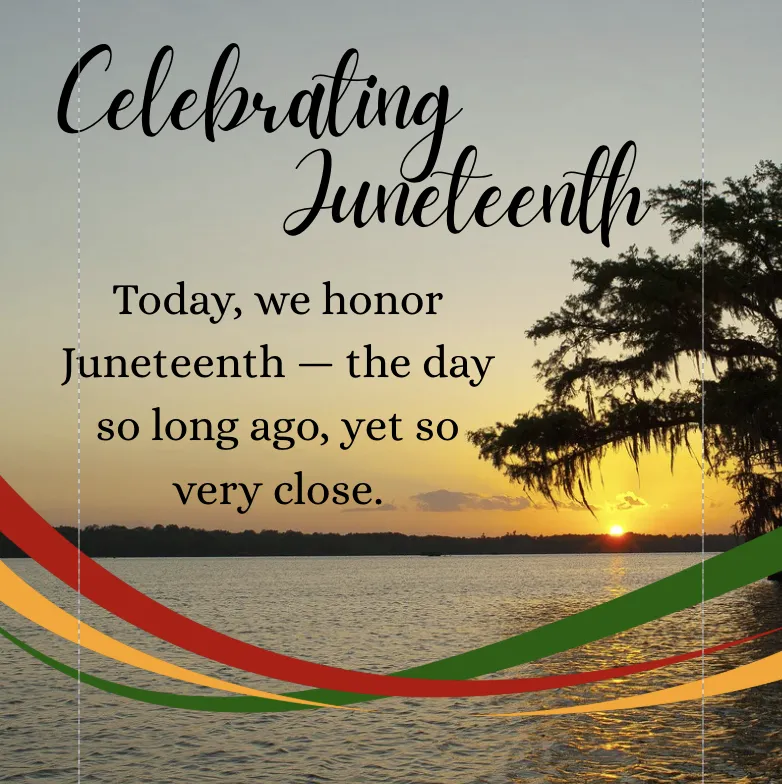
So long ago, yet so very close.
On a hot, humid summer day, June 19, 1865, black smoke from steamships drifted across Galveston Harbor, one of Texas’s biggest port cities. Steamships regularly moved in and out of the harbor, but this day was different.
A fleet of transport ships and military vessels, likely arriving from New Orleans, carried Union General Gordon Granger and approximately 2,000 federal troops toward the docks. American flags billowed in the Gulf breeze, raised high above the vessels, a striking contrast to the Confederate flags that had long symbolized life in Texas.
For months, rumors of freedom had spread among both the enslaved and enslavers. Yet because Texas was geographically isolated and remained under Confederate control, there were few Union troops to enforce the Emancipation Proclamation of January 1, 1863. Many enslaved people weren’t sure whether to believe the rumors, while slave owners simply ignored what the proclamation demanded.
This day, however, would change everything for everyone.
These ships docked in the middle of the bustling heart of Galveston … a waterfront lined with hotels, merchants, and cotton presses. For those watching from the shore, it would have been a profound moment.
I can imagine how domestic servants must have looked out the windows of their enslavers’ opulent homes toward the harbor, filled with a cautious hope and anticipation they had not known during their years of enslavement. Whispers moved through the halls as word spread that something extraordinary was unfolding. There had been rumors of freedom. Was this the moment?
Young Black children, working alongside their mothers in the markets, had never seen such a spectacle of towering ships entering the harbor, and in their innocence had no idea what their future was about to hold. Talk rippled through the streets, and enslavers panicked, knowing their unjust fortunes and way of life were about to change. Many hid the news from those they enslaved for as long as they could.
But darkness can never extinguish the light.
Almost two years after the Emancipation Proclamation, in which Abraham Lincoln declared that enslaved people in areas still in rebellion against the United States “shall be then, thenceforward, and forever free.”
General Granger and the 2,000 federal troops disembarked the ship and established his Union Army headquarters at the historic Osterman Building in Galveston. The building is now gone, but it is a historic sight with a plaque that was only placed there in 2014.
Throughout the city of Galveston and the surrounding areas, Order No. 3 was read publicly and posted around the city. Here is a piece of what it said.
“The people of Texas are informed that, in accordance with a proclamation from the Executive of the United States, all slaves are free.”
As a white Southern woman, I have come to understand Juneteenth more deeply than I ever did before. Freedom had been declared on paper for two and a half years, but it was not freedom realized, not fully, not everywhere. It took soldiers. It took closing the distance between the battlefield and the back roads of Texas. It took June 19th, 1865, for those words written in 1863 to finally become true for the people standing in Galveston that day.
Felix Haywood, who was born into slavery in Texas around 1845, summed up that day in a 1937 interview in San Antonio for the Federal Writers’ Project’s Slave Narratives: A Folk History of Slavery in the United States from Interviews with Former Slaves.
“Soldiers, all of a sudden, was everywhere—comin’ in bunches, crossin’ and walkin’ and ridin’. Every one was a-singin’. We was all walkin’ on golden clouds. Hallelujah!”
“Everybody went wild. We all felt like heroes, and nobody had made us that way but ourselves. We was free. Just like that, we was free.”
“The end of the war, it come jus’ like that, like you snap your fingers.”
“How did you know the end of the war had come?” the interviewer asked.
“How did we know it? Hallelujah broke out—”**
As I read Felix Haywood’s words and imagined all he had experienced on that hot, humid day in Texas on June 19, 1865, I understand Juneteenth in a way I never had before. His story gives me every reason to honor and celebrate this day, formerly known as Jubilee Day or Emancipation Day, just as many Black families have since 1866. There were church gatherings, prayer meetings, shared meals and picnics, readings of the Emancipation Proclamation, and joyful reunions with family members separated by slavery.
I can picture those moments … so long ago yet still so very close. From this day forward, I will always remember.
Felix Haywood’s words have stayed with me since I first read them, and I hope they stay with you, too. If this story moved you, subscribe below — there’s more history worth uncovering, and I don’t want you to miss what’s next.


